


Is an eSIM Cheaper Than Roaming? The Short Answer
Yes, in almost every case. An eSIM - a SIM built into your phone, so there is no small plastic card to swap - usually costs far less than turning on roaming with your home carrier. Roaming charges are priced to cover a phone call from anywhere in the world. An eSIM plan is priced for the country you are actually visiting, which is a much smaller job.
The gap gets bigger the longer you stay and the more data you use. A weekend trip might not show much difference. A two-week holiday almost always will.
What Roaming Actually Costs You
Roaming means using your home phone plan while you are in another country. Your carrier lets your phone connect to a local network there, then charges you for it - often by the megabyte, sometimes by the day.
Three things make roaming expensive:
- Per-day roaming passes often charge you for every day of your trip, even the days you barely use your phone.
- Pay-as-you-go roaming rates can run into several dollars per megabyte outside your carrier's usual coverage zone - enough that one map search or video call can cost more than a coffee.
- Background apps keep using data without you noticing, so the bill often arrives higher than expected.
None of this is a mistake on your part. Roaming was built for occasional use, not for someone who wants to use maps, messaging and photos normally every day of a trip.
What an eSIM Costs Instead
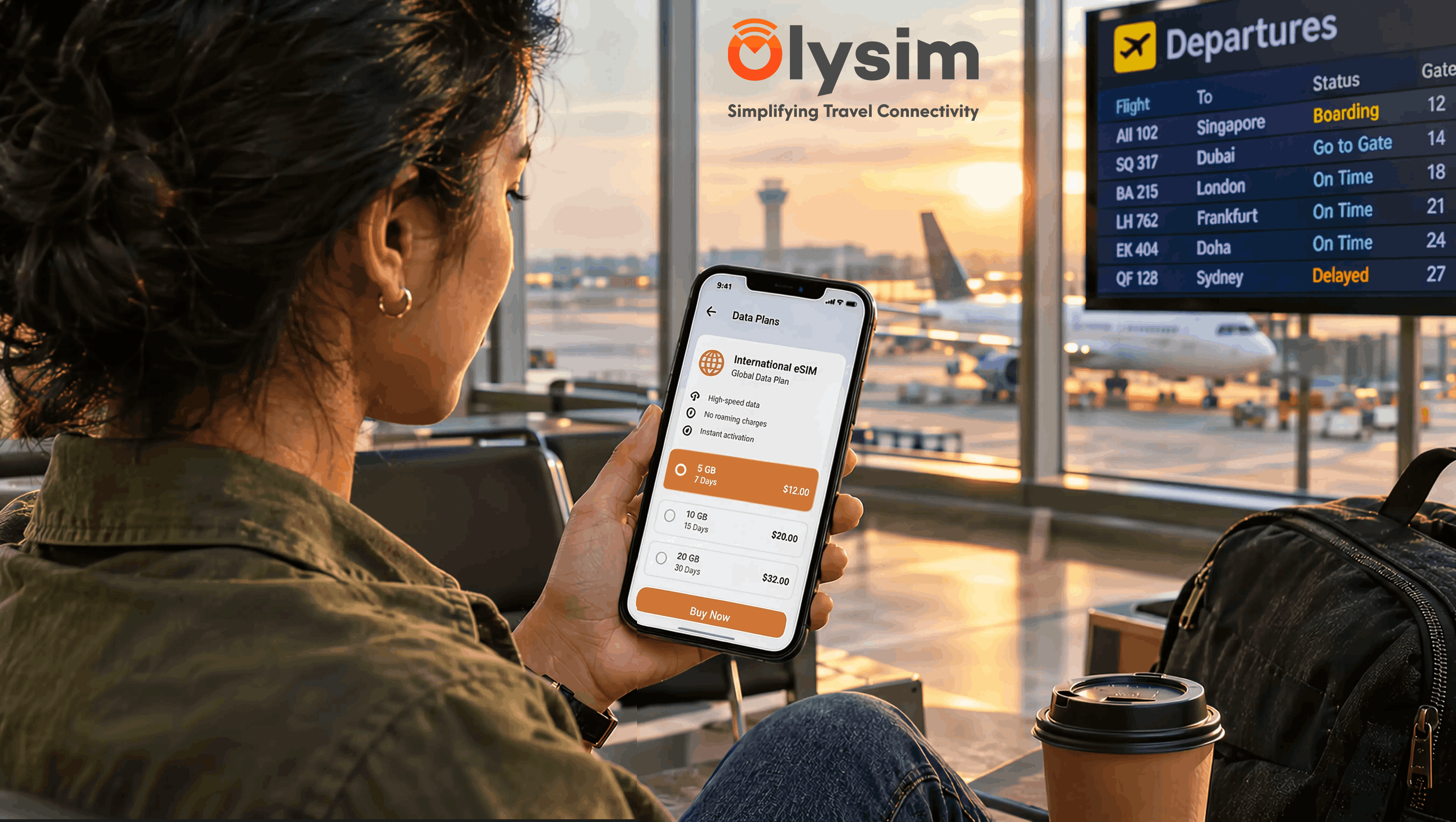
A travel eSIM works differently. You buy a data plan for the country or region you are visiting, before you fly or right after you land. The price is set for local data in that place, not for global roaming access.
That plan gives you a fixed amount of data, for a fixed number of days, at a price shown to you at checkout for your location. There are no surprise per-megabyte charges once you have picked your plan. You can see current plans and pricing for your destination on the Olysim plans page.
eSIM vs Roaming: Side by Side
| Factor | Home Carrier Roaming | Travel eSIM |
|---|---|---|
| How it's priced | Per day, or per megabyte used abroad | One flat price for a fixed data amount and trip length |
| Bill surprises | Common, especially with background app data use | None - you know the cost before you travel |
| Setup effort | Usually automatic, but you must remember to turn it on | A short one-time setup before you fly, see our install guide |
| Your phone number | Stays exactly the same | Stays the same - the eSIM just adds a second data line |
| Best for | A single short call or a few minutes of checking maps | Everyday use for a full trip - maps, messaging, photos, calls |
The key takeaway: roaming charges you for using your home network from far away. An eSIM charges you for local data in the country you're actually in - and local data is almost always the cheaper way to buy it.
When Roaming Might Still Make Sense
Roaming isn't always the wrong choice. If your trip is a single overnight stopover, or you only need your phone for a few minutes total, a short roaming pass from your home carrier might work fine.
If you're visiting several countries on one trip, a regional eSIM plan can also save you from buying a new plan at every border. Olysim offers regional options such as the Europe 33 Countries plan and the USA/Canada plan, so one eSIM covers the whole route.
How to Check Before You Fly
Before you decide, take three minutes to check the numbers for your own trip:
- Check your phone supports eSIM on our compatible device list.
- Look up your home carrier's roaming rate or daily pass price for your destination.
- Compare that against a local eSIM plan on our plans page for the same trip length.
- If anything is unclear, our FAQ page covers the most common questions.
Most travellers find the eSIM wins on price the moment their trip runs past a couple of days, and it wins on convenience from the very first minute - no counter to find, no local shop to search for after you land.
The Bottom Line
For most trips, an eSIM beats roaming on cost, and it removes the guesswork of a surprise bill when you get home. Roaming still has its place for very short or very light use. For everything else, buying local data through an eSIM is the simpler and cheaper route.
You can see live pricing for your destination and set up your eSIM before you fly on the Olysim plans page.


